





I. UNDERSTANDING BRAND POSITIONING
1/ What Is Brand Positioning?
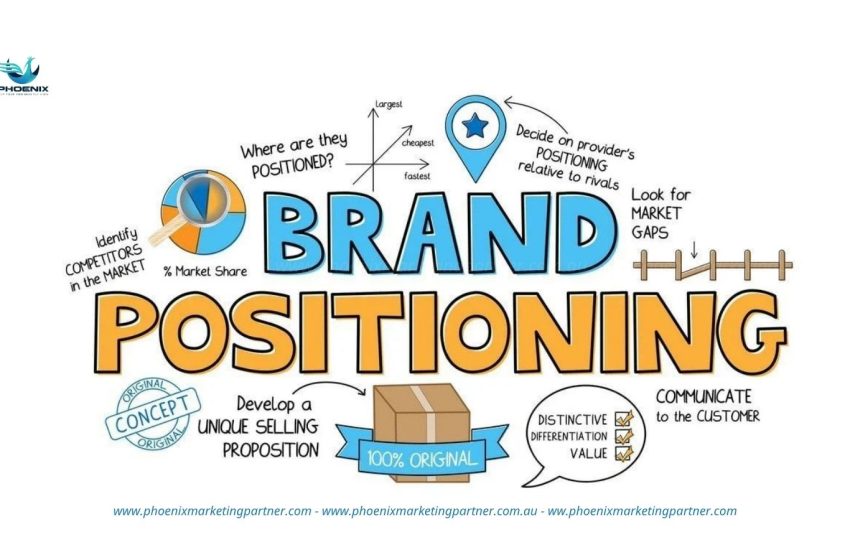
Brand positioning is the process of establishing a unique and meaningful place for a brand in the minds of customers. It is often considered one of the core elements of a company’s overall branding and marketing strategy.
Brand positioning reflects how a business differentiates itself, grows, and competes within its industry to earn a distinctive position in the marketplace. It also communicates the unique strengths and value of its products or services, giving customers compelling reasons to choose the brand over its competitors.

2/ The Purpose of Brand Positioning
If a business wants sustainable growth and strong customer relationships, brand positioning is essential. An effective positioning strategy provides numerous benefits, including:
+ Easier access to the right customers: Rather than simply launching marketing campaigns to reach as many people as possible, brand positioning helps businesses connect with customers who genuinely need their products or services, creating stronger and more meaningful relationships.
+ Becoming the first brand customers think of: Successful brands create trust and lasting impressions. When customers eventually need a product or service, a well-positioned brand is the first one that comes to mind instead of its competitors.
+ Differentiating from competitors: With increasing market competition, standing out has become more important than ever. Effective brand positioning highlights a company’s unique strengths and distinguishes it from countless competitors.
+ Building a foundation for future growth: Once customers trust a brand, they are more willing to embrace new products and services introduced under the same brand name.
+ Developing long-term customer relationships: Winning a customer’s attention is only the beginning. Strong brand positioning encourages customer loyalty, repeat purchases, and long-lasting relationships.

3/ Eight Common Brand Positioning Strategies
Businesses can position their brands using different approaches, including:
3.1 Price-based positioning
3.2 Quality-based positioning
3.3 Value-based positioning
3.4 Benefit-based positioning that addresses customer needs
3.5 Celebrity endorsement positioning to build trust
3.6 Competitor-based positioning
3.7 Cultural and heritage positioning
3.8 Repositioning to adapt to changing market conditions while strengthening existing advantages
Every brand requires a positioning strategy tailored to its own goals, target audience, and competitive environment.

The real challenge is determining which positioning strategy is the most appropriate and whether it truly supports long-term business objectives. This requires comprehensive customer research, market analysis, and strategic planning.
II. HOW TO BUILD AN EFFECTIVE BRAND POSITIONING STRATEGY
Developing a successful brand positioning strategy involves the following six steps.
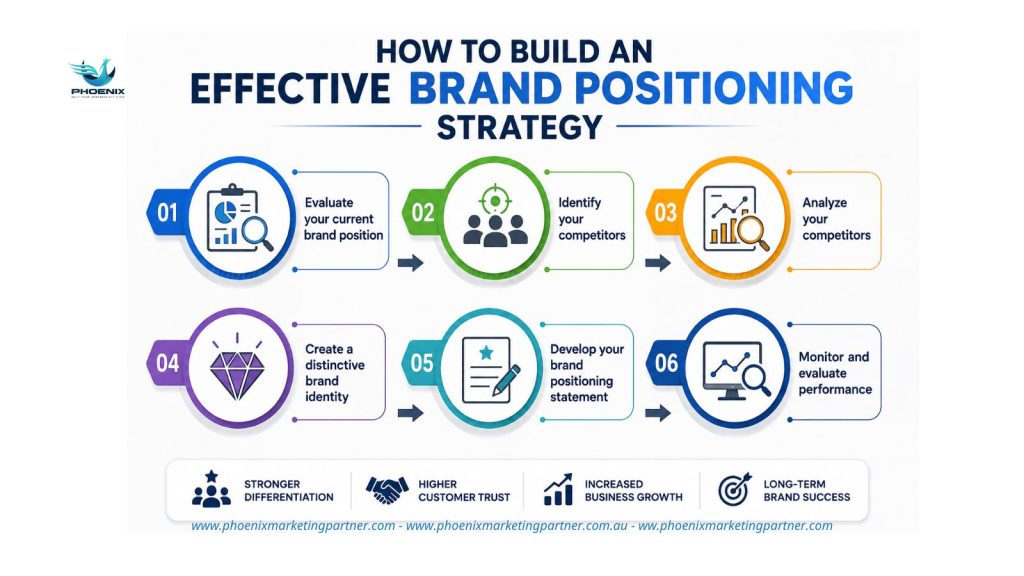
Step 1. Evaluate your current brand position
Before launching any branding initiative, businesses should clearly understand where their brand currently stands. Consider the following questions:
+ Who is your target audience?
+ What makes your brand unique?
+ What is your brand’s mission and purpose?
+ What core values does your brand represent?
Step 2. Identify your competitors
Once you understand your own brand, the next step is to identify and study your competitors. Competitive insights can be gathered through market research, social media analysis, customer feedback, and evaluating competitors’ products and services.
Step 3. Analyze your competitors
Competitive analysis helps businesses learn from competitors’ successes while avoiding their mistakes.
Important areas to evaluate include:
+ Their strengths and weaknesses
+ Products and services they offer
+ Their unique selling propositions
+ Current marketing and branding strategies
+ Their market position
+ The effectiveness of their campaigns
Step 4. Create a distinctive brand identity
After understanding both your own business and your competitors, use those insights to build a stronger and more distinctive brand. Learn from competitors’ shortcomings while emphasizing the unique strengths that make your business stand out.
Step 5. Develop your brand positioning statement
A brand positioning statement is a concise declaration that communicates your brand’s unique value to customers.
Your positioning statement should clearly define:
+ Your target customers
+ What products or services you provide
+ What makes those offerings different
+ The benefits customers receive
+ Evidence that supports your claims
Step 6. Monitor and evaluate performance
Brand positioning is an ongoing process rather than a one-time activity.
Businesses should regularly measure results, monitor customer perception, evaluate market changes, and refine their positioning strategy whenever necessary to achieve long-term success.