




In a context where businesses are increasingly investing in events to enhance brand awareness and customer engagement, the stage once considered merely a “supporting element” is now becoming the centerpiece of the experience. No longer just a place where programs take place, today’s stage is seen as a “non-verbal language,” where brands are expressed visually, vividly, and emotionally.
1/ THE SHIFT IN STAGE DESIGN THINKING
According to observations from the event industry, approaches to stage design have undergone significant changes. In the past, businesses mainly focused on visual completion such as backdrops, lighting, and basic layouts. Today, the requirements have evolved to a new level.A stage is no longer just about being visually appealing it must be “right”: aligned with the message, the target audience, and the communication objectives. This means stage design can no longer be separated from the overall marketing strategy.
According to a Phoenix expert: “Guests may not remember the exact program content, but they will remember how they felt when entering the event space. And that feeling largely comes from the designed environment and stage.”
2/ WHEN EXPERIENCE BECOMES THE CORE
In the era of experience-driven marketing, businesses compete not only through products or services, but also through the emotions they create for customers. The stage, as the focal point of attention, becomes a key tool to bring this to life.
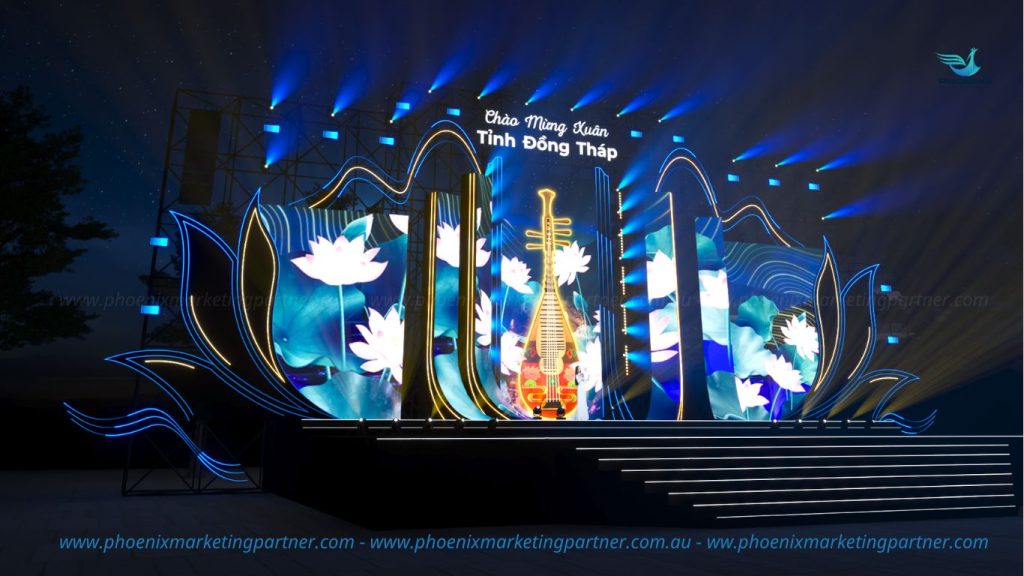
An effective stage design does more than convey information it guides the audience’s emotions from initial curiosity, to the program’s climax, and finally leaves a lasting impression. This is a carefully calculated journey, where every detail from lighting and color to movement contributes to the overall experience.
3/ TECHNOLOGY SUPPORTS, NOT REPLACES IDEAS
Technological advancements have unlocked new creative possibilities in stage design, from large LED screens to projection mapping and 3D effects. However, industry experts emphasize that technology only delivers value when used appropriately.
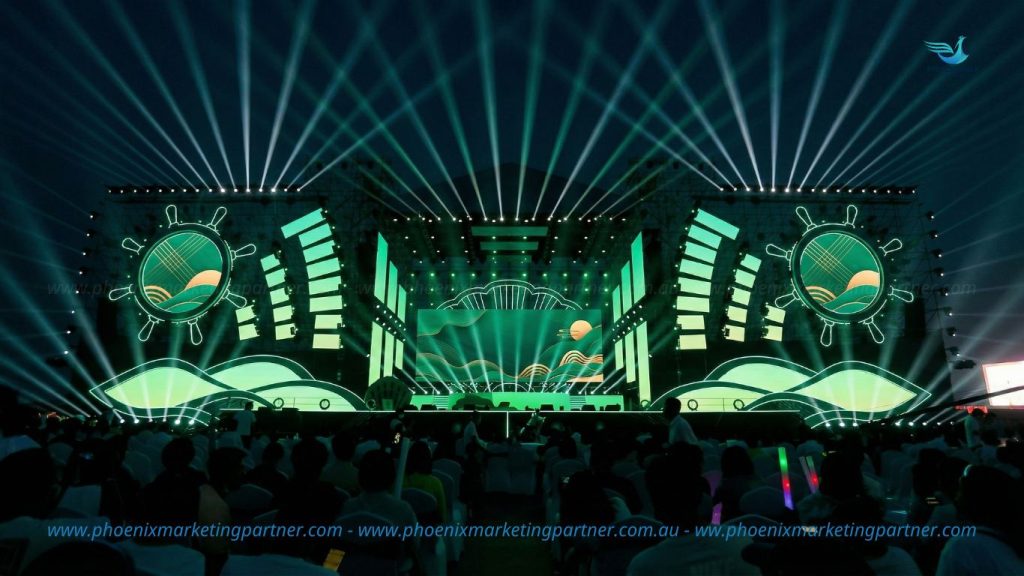
Overusing effects can overwhelm the space, dilute the core message, and even backfire. In contrast, a well-balanced design that uses technology as a tool to support the core idea will create more impactful and memorable touchpoints.
4/ EVENT STAGES AS A NEW “MEDIA CHANNEL”
A notable trend is that stages are increasingly functioning as a form of media within a company’s communication strategy. Visually striking designs that align with guests’ photo-taking and video-recording behaviors can generate a large volume of organic content on social media.
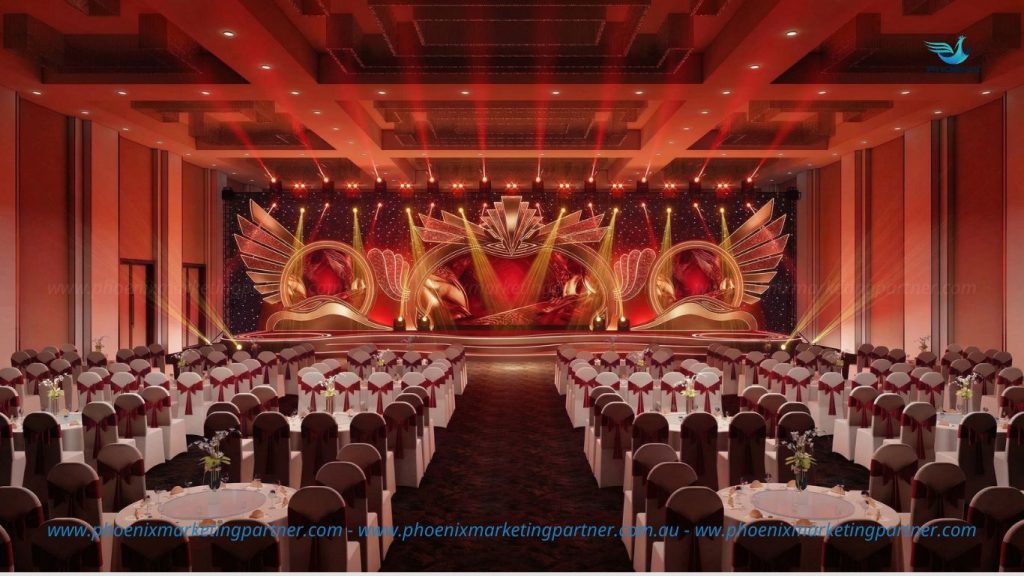

From check-in photos to short videos, every captured moment at an event can become a “communication touchpoint,” helping brands reach wider audiences without increasing advertising budgets.
This creates a new requirement for designers: not only must the stage look impressive in real life, but it must also be optimized for visual capture and digital sharing.
5/ THE BALANCE BETWEEN EFFECTIVENESS AND COST
As businesses place greater emphasis on return on investment (ROI), stage design must also be evaluated from an economic perspective. A well-invested stage can deliver value far beyond its initial cost by enhancing guest experience, increasing shareability, and strengthening brand perception.
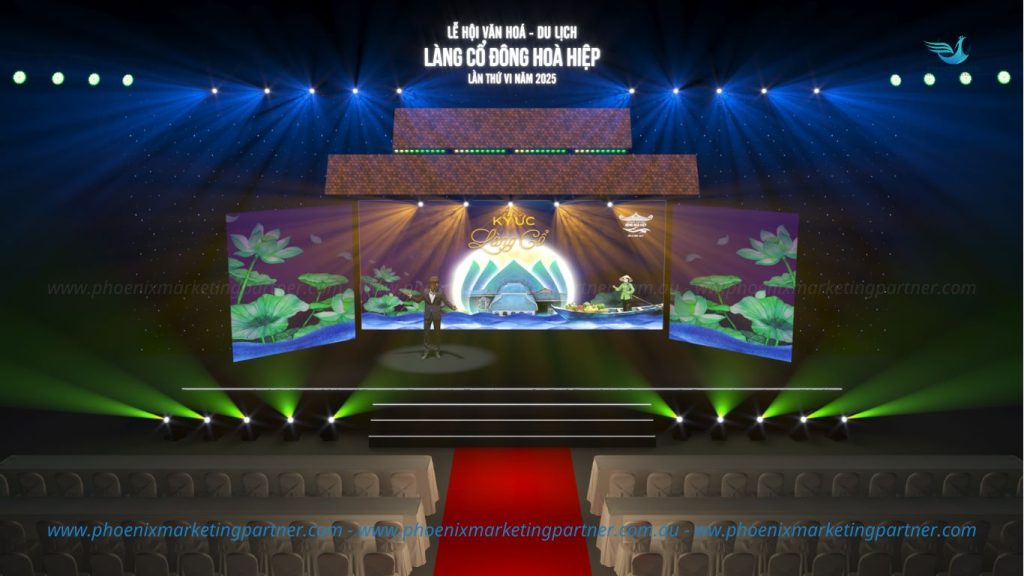

On the other hand, cost-cutting without strategy such as reducing design or execution quality can make the entire event feel underwhelming, diminishing the effectiveness of other investments.
6/ THE FUTURE DIRECTION FOR BUSINESSES
In response to rising market demands, professional stage design companies are shifting from execution roles to strategic partnerships. Rather than simply receiving briefs and delivering, they are now more deeply involved in consulting, concept development, and experience design.
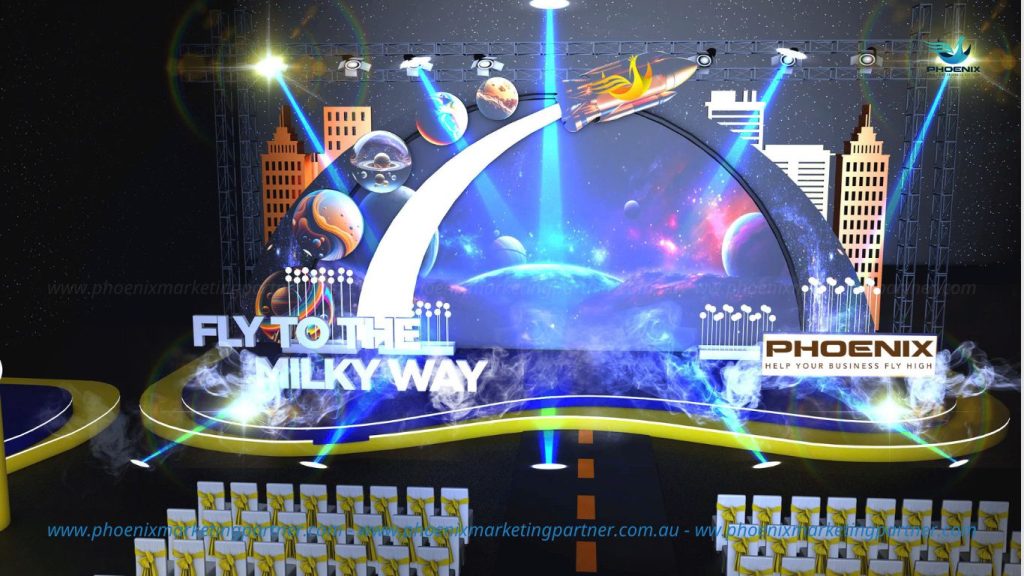

The evolving perception of stage design reflects a broader trend in marketing: moving from information delivery to experience creation. In this transformation, event spaces with the stage at the center serve as critical touchpoints between brands and customers.
When executed effectively, a stage is no longer just a venue for performances—it becomes a place where the brand is felt, an increasingly valuable factor in building brand image and trust in today’s market.
Phoenix provides stage design services for corporate events and music events. Contact us for a consultation.