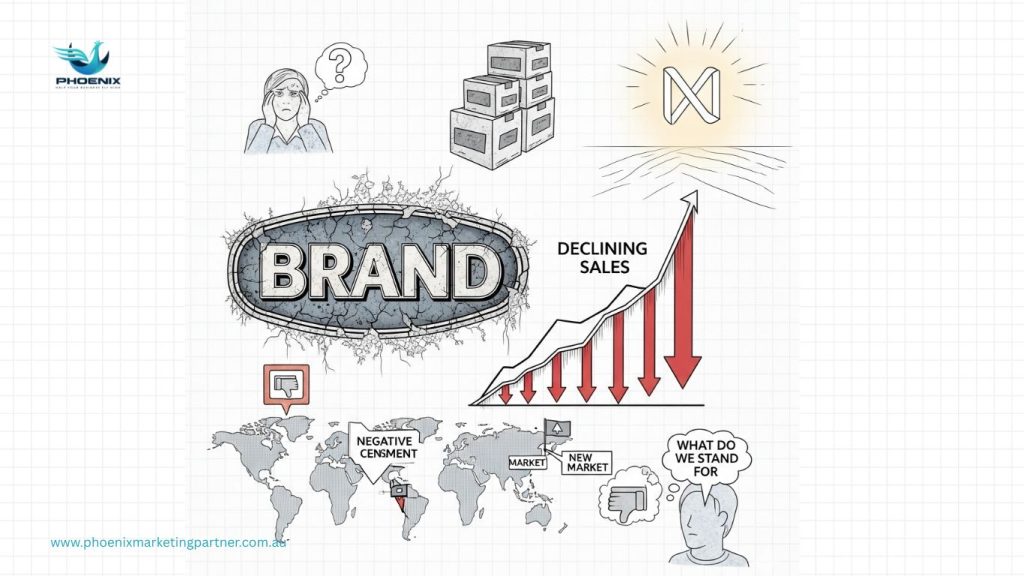





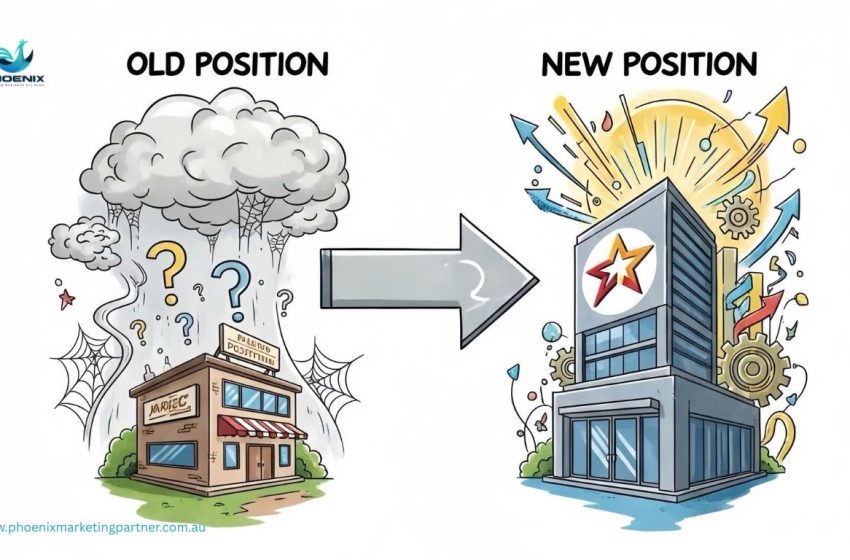
Does your brand still reflect its core values and truly connect with today’s customers? A beautiful logo alone isn’t enough to keep a brand alive in people’s minds. Sometimes, what a business needs is a complete transformation. That’s brand repositioning.
1/ What is Brand Repositioning?
Brand Repositioning is the process of adjusting, changing, or refreshing how a brand is perceived in the minds of customers.

There is a common misconception that brand repositioning simply means changing the logo, launching new products, or revamping a website interface. In reality, it is a broad and comprehensive strategy that involves revisiting the entire corporate identity and aligning it with new objectives.
2/ Brand and misunderstandings around it
Many people mistake a logo or a name for a brand. In fact, a brand is not only something we can see or hear, but also a promise to customers, a cultural personality built and nurtured over time.
A strong brand helps businesses gain customer trust, turning them into loyal consumers and even free brand advocates.
For startups and small businesses, many founders are often unaware of the true value of branding or confuse running media campaigns, press coverage, and advertising with brand-building. True branding must be built on the brand’s core values, understanding, and empathy consistently delivered along the customer journey.
A sustainable brand must be built clearly, consistently, and with a focus on long-term value. And certainly, every business large or small needs to build its brand. Branding is not reserved for large corporations alone.
Throughout development, there will be times when businesses need to change. So, when should you reposition your brand (rebranding) and when should you simply redesign (redesigning)?


3/ Brand Repositioning
Brand repositioning is essentially a complete “transfusion”—a transformation from the inside out. It is not just about refreshing a logo or color palette, but a journey of reshaping brand identity: vision, mission, business model, corporate restructuring, and even a rebirth of brand thinking.
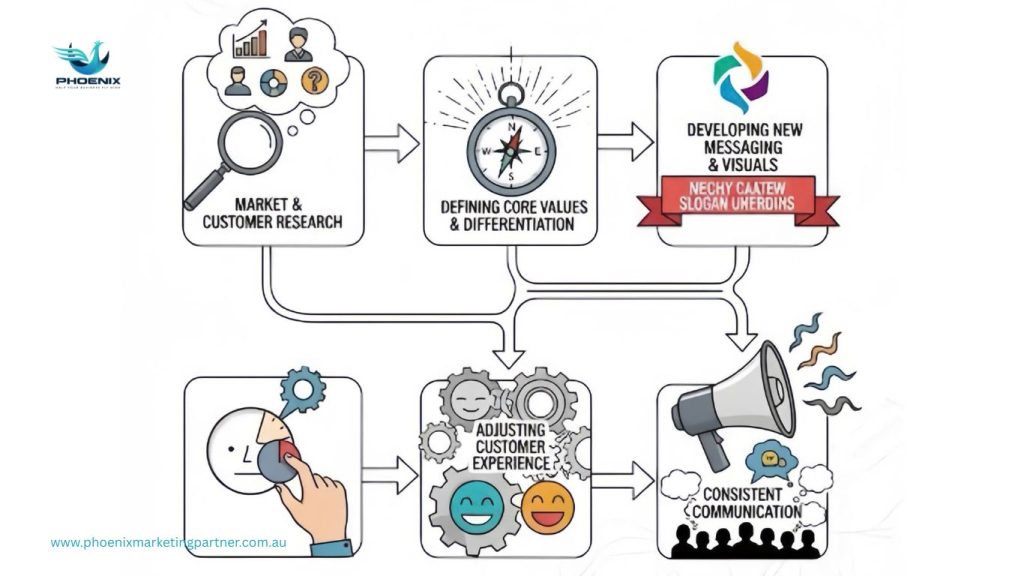
In practice, depending on the business, brand repositioning often involves:
- Market & customer research: What do customers currently think of the brand, and what do they expect?
- Redefining core values & differentiation: How does the business want to be remembered?
- Creating new messaging & visuals: Logo, colors, slogan, and brand story.
- Adjusting customer experience: From product/service delivery to customer care and brand communications.
- Executing consistent communication: Ensuring customers notice and connect with the change.
Brand repositioning is a strategic transformation not every business needs it, but for some, it is essential.
4/ When do businesses need brand repositioning?
Repositioning is a major strategy, usually pursued when the brand no longer reflects its core values, or when the business enters a new growth stage. It goes beyond visuals it encompasses business strategy, customer experience, target markets, and even operational models.
To reposition successfully, businesses need a new brand philosophy and a compelling story that resonates emotionally with customers. While it requires significant time, resources, and commitment, in return, repositioning opens the door to sustainable growth and a stronger competitive stance.
Signs that it may be time to embark on a “major overhaul” of brand repositioning include:
- Brand no longer reflects the company’s essence: For example, expansion into new markets, shifts in strategy, or upgrading positioning (e.g., from mass-market → premium).

- Loss of differentiation: Fierce competition causes the brand to blend into the crowd, requiring renewal to stand out.
- Disconnect with new generations of customers: As trends and customer preferences shift, outdated imagery and messaging no longer resonate with Millennials and Gen Z.
- Outdated digital experience: Website, tone of voice, and communications no longer fit modern online behaviors.
- Lack of brand “heart”: Core values and vision are unclear, failing to inspire customer empathy and loyalty.
- Major changes in ownership or leadership: Calling for a new direction and image.
- Crisis or reputation damage: Repositioning may serve as a “second chance” to rebuild trust.
5/ Types of brand repositioning
By motivation:
- Proactive rebranding: Businesses intentionally change to seize new opportunities—expanding markets, launching differentiated product lines, or modernizing the image to connect with new generations. This reflects strategic vision and adaptability.
- Reactive rebranding: Triggered by external forces mergers, acquisitions, PR crises, legal issues, or industry disruptions. The goal is to restore reputation and regain trust.
By scope:
- Partial rebranding: Changing only certain elements such as logo, colors, slogan, or communication style while keeping the brand’s core intact. Often used to refresh without losing familiarity.
- Total rebranding: A complete transformation changing vision, mission, brand identity, visual system, business strategy, and customer experience. Typically occurs when entering a new growth phase or facing severe crises.
By direction:
- Market repositioning: Shifting to a different target segment (e.g., from budget to premium, or vice versa).
- Product repositioning: Reemphasizing core strengths or benefits to better match customer needs.
- Image Repositioning: Refreshing style, tone, and identity to stay relevant with modern trends.
- Competitive Repositioning: Redefining advantages to stand out distinctly from competitors, carving out a unique space in the industry.

6/ How to reposition effectively?
Not every business always needs repositioning but sometimes it is a matter of survival. Repositioning means “starting over from the roots,” recreating the brand essence to move toward a new growth trajectory.
Key steps include:
- Know yourself first: Ask does the brand still reflect the company’s essence and stature? Is it still distinctive in customers’ eyes? Does it align with today’s digital expectations? If the answer is mostly “no,” it’s time to act.
- Rely on data: Look at the numbers outdated communication materials, weak engagement, stagnant sales, declining website rankings. Does the brand stand out among competitors both online and offline, or is it fading?
- Keep customers at the center: Every change must revolve around customers. Consistency in their experience is the foundation of trust and the driver of sustainable growth. Does your digital experience still meet modern expectations? Remember: brands exist to serve customers, not their owners so understanding who you serve is crucial to designing the right touchpoints.